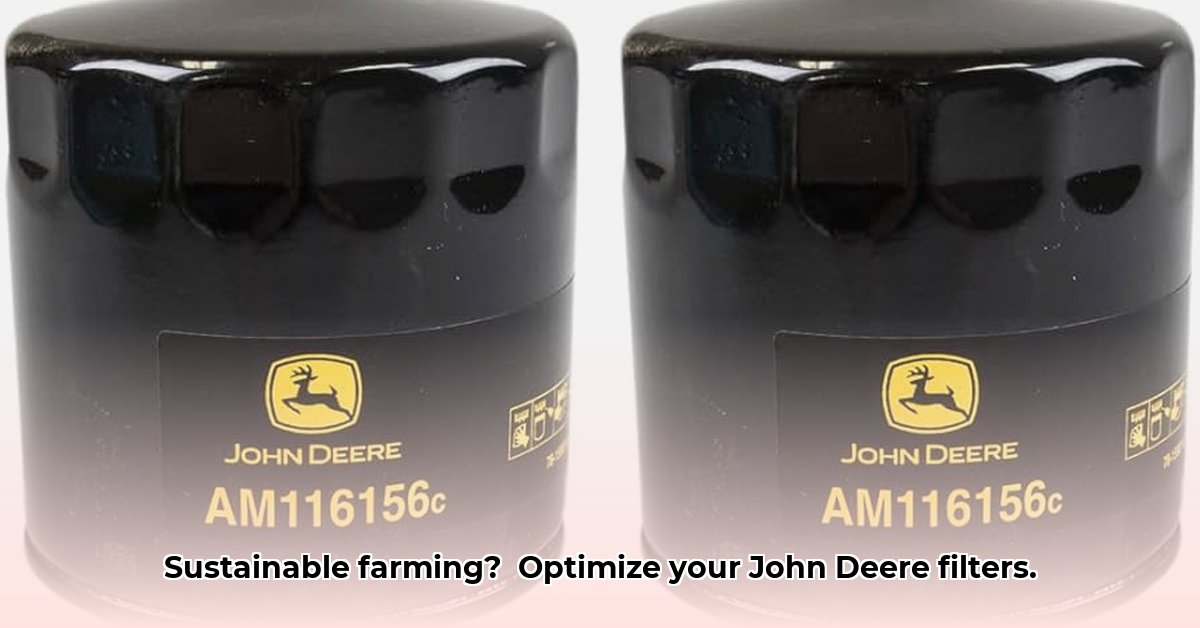
John Deere Tractor Oil Filters: Balancing Performance and Sustainability
Farmers today face a critical challenge: maintaining peak equipment performance while minimizing environmental impact. John Deere tractor oil filters are a crucial component of this balancing act. While essential for engine longevity and operational efficiency, their lifecycle presents a complex sustainability puzzle. This article delves into the environmental implications of these filters, exploring their composition, disposal, and the steps we can take to cultivate more environmentally responsible farming practices. For more information on lawn tractor oil, see this helpful resource: lawn tractor oil.
Understanding the Environmental Impact of John Deere Tractor Oil Filters
A John Deere tractor's oil filter is critical for engine health, removing harmful contaminants and maximizing engine lifespan. This translates to reduced downtime and increased productivity. However, the filter's own life cycle—from manufacturing to disposal—contributes significantly to its overall environmental footprint. The lack of transparency regarding the precise material composition of many John Deere filters presents a significant obstacle to a comprehensive Life Cycle Assessment (LCA). This absence of detailed information hinders our ability to accurately assess their environmental effect.
The Crucial Role of Life Cycle Assessments (LCAs)
A complete LCA is paramount for evaluating the true environmental sustainability of John Deere tractor oil filters. Such an assessment would analyze every stage of the filter's lifecycle, from raw material extraction and manufacturing to transportation, usage, and final disposal. It needs to account for energy consumption, greenhouse gas emissions, and waste generation at each stage. Comparing these LCAs across different filter types and brands would offer valuable insights into achieving greater environmental stewardship.
Actionable Strategies for Sustainable Filter Management
Several key stakeholders can contribute to creating a more sustainable system for John Deere tractor oil filters:
John Deere's Transparency Initiative: Increased transparency regarding filter composition and recyclability is crucial. Publicly releasing detailed LCAs would provide farmers and regulators with the data needed to make informed choices. Furthermore, investing in research and development of more environmentally friendly materials for future filter designs is vital for long-term sustainability.
Precision Farming Practices for Optimized Filter Usage: Farmers can minimize waste by implementing precision farming techniques, optimizing oil change intervals based on actual equipment usage rather than arbitrary schedules. Advanced maintenance systems can predict filter replacement needs using real-time data analysis, avoiding unnecessary replacements.
Developing Robust Recycling Infrastructure: Creating specialized recycling programs for John Deere filters is paramount. This requires investment in innovative recycling technologies capable of handling the diverse materials in these filters. Government incentives and partnerships with recycling companies are critical for effective implementation.
Strengthening Regulatory Frameworks: Clearer government regulations around filter composition disclosure and end-of-life management are essential (Extended Producer Responsibility or EPR). This promotes transparency and accountability, ensuring manufacturers actively participate in sustainable disposal solutions.
Navigating Challenges and Mitigating Risks
Several challenges must be addressed to ensure sustainable filter management:
| Risk Factor | Likelihood | Impact | Mitigation Strategies |
|---|---|---|---|
| Difficulty Recycling Filters | High | Significant | Develop specialized recycling programs and invest in advanced recycling technologies. |
| Environmental Impact of Materials | High | Moderate | Transition to eco-friendly materials; optimize manufacturing processes. |
| Disposal Costs | Moderate | Low | Implement convenient take-back programs; educate farmers on proper disposal. |
| Counterfeit Filters | Low | Moderate | Enhance authentication methods; raise consumer awareness about counterfeit risks. |
The Future of Sustainable Farming: A Collaborative Approach
Optimizing the sustainability of John Deere tractor oil filters requires a coordinated effort. John Deere's commitment to transparency, farmers' adoption of precision farming practices, the development of robust recycling infrastructure, and the implementation of effective government regulations are all vital components of a sustainable agricultural future. This collective action contributes not only to environmental protection but also to the long-term economic viability of farming operations. Ongoing research and continuous improvement are critical to refining best practices and achieving a genuinely sustainable approach to agricultural machinery maintenance.
Key Takeaways:
- Optimizing filter usage and disposal is critical for sustainable farming practices.
- Transparency in filter composition and lifecycle data is essential for informed decision-making.
- Collaboration among John Deere, farmers, recyclers, and governments is key to achieving significant progress.
- Investing in innovative recycling technologies is crucial for effective filter reuse and waste reduction.